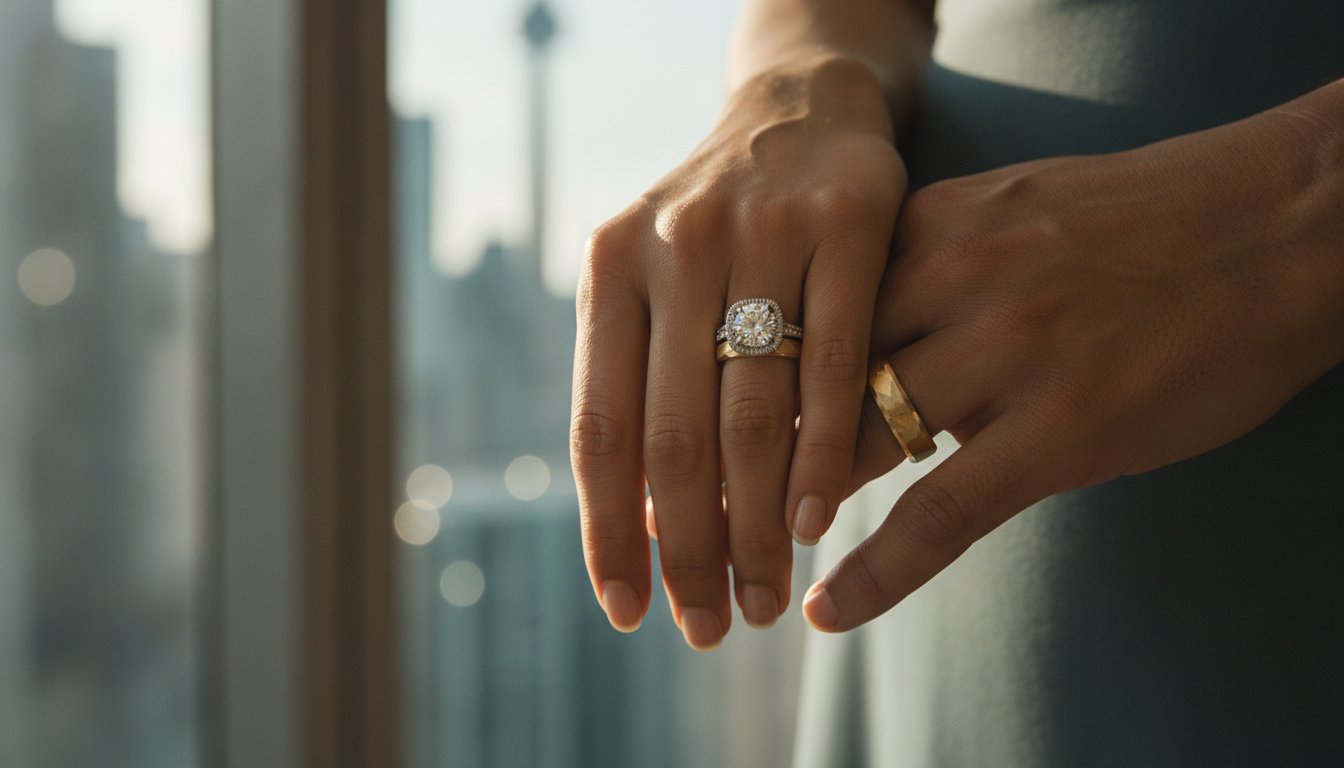
What if the very thing that makes a diamond beautiful is also what makes it the most difficult to buy? If you're looking at emerald cut engagement rings in the GTA this year, you've likely realized that their open, glass-like tables don't hide anything. It's a common fear among my clients at our downtown Toronto studio: the worry that a visible inclusion will ruin the clean, architectural lines of a step-cut stone. You want that sophisticated, hall-of-mirrors effect, but the technical jargon of the 2026 jewellery market can feel overwhelming.
I agree that choosing an emerald cut requires a sharper eye than a standard round brilliant. In my experience, the difference between a dull stone and one that reflects Master Canadian craftsmanship comes down to nuances that aren't always on a grading report. This masterclass will give you the insider knowledge to distinguish between step-cuts and brilliant-cuts with confidence. I'll help you select a stone that fits your budget while ensuring your ring is a timeless, investment-grade piece that truly reflects your personal style.
• Understand the unique "hall-of-mirrors" light reflection that defines emerald cut engagement rings and sets them apart from traditional brilliant-cut styles.
• Learn why the "Clarity Trap" makes VS2 or higher grades essential to ensure your diamond remains eye-clean under its large, open table.
• Master the colour-grading logic needed to maintain a bright, colourless look in a stone shape that naturally holds more hue than round diamonds.
• Discover how Master Canadian craftsmanship, including specialized corner protection and trilogy settings, secures your investment-grade piece for a lifetime.
• Prepare for a collaborative design experience at our downtown Toronto studio to turn your vision into a bespoke reality.
The 2026 Toronto jewellery market is seeing a distinct shift away from maximalist "bling" toward what I call architectural elegance. This is why emerald cut engagement rings have become a cornerstone of our custom work this year. Unlike the rounded shapes that prioritize sparkle, the emerald cut is defined by its elongated rectangular shape and parallel facets. This technique, known as a step-cut, draws from the history and technique of diamond cutting to create a look that is far more disciplined than a standard brilliant cut.
Instead of the multi-directional "shimmer" you see in a round stone, these rings produce a "hall-of-mirrors" effect. It's a sophisticated play of light where long, clean flashes of white and dark move across the stone. In my experience, clients in the GTA who choose this style aren't looking to be the loudest in the room. They value a sense of understated luxury and clarity. It’s a psychological preference for transparency over distraction.
Most engagement rings feature brilliant-cuts, like ovals or rounds, which use triangular facets to create a "crushed ice" look. An emerald cut is different. Its facets are rectangular and arranged like steps. This creates a large, open table on the top surface. Think of it as a clear window into the heart of the diamond. While a radiant cut might hide small flaws with its chaotic sparkle, the emerald cut reveals everything. It demands a higher standard of stone selection to achieve an investment-grade appearance.
I’ve found that emerald cut engagement rings resonate deeply with those who love a vintage Art Deco aesthetic but want it to feel modern. Beyond the style, there's a practical benefit. The elongated shape naturally draws the eye along the length of the hand. This often makes the wearer's fingers appear longer and more slender. From a value perspective, emerald cut diamonds are typically 30% to 35% less expensive than round brilliant diamonds of comparable quality. If you want a ring that balances Master Canadian craftsmanship with a bold, structural silhouette, this is your stone.
When you are browsing for emerald cut engagement rings, the grading report only tells half the story. Unlike round diamonds that use sparkle to mask imperfections, the emerald cut is completely transparent. I often warn my clients about the "Clarity Trap." Because of the large, open table and step-cut facets, inclusions that would be invisible in other shapes are easily seen here. In my experience, you should prioritize a clarity grade of VS2 or higher to ensure the stone remains eye-clean. If an inclusion is located right under that top window, it will reflect throughout the stone like a hall of mirrors.
Colour is the second critical factor. Emerald cuts tend to hold more natural body colour than brilliant-cuts. While an 'I' colour might look white in a round diamond, it often shows a slight yellow tint in a rectangular step-cut. To achieve a truly colourless look that highlights Master Canadian craftsmanship, I recommend staying at a G grade or better. However, the right metal choice can change this logic. If we are designing a yellow gold setting, a slightly warmer stone can look intentional and sophisticated.
Pro-Tip: In the studio, I always tell clients to look for "eye-clean" stones first. Sometimes a lower grade with a hidden inclusion near the edge is a better investment-grade value than a technically higher grade with a visible mark in the centre of the table. If you are feeling stuck between two stones, let's look at them together under the loupe.
Don't overlook the Length-to-Width (L/W) ratio. This number determines the diamond's silhouette. A ratio between 1.30 and 1.50 is the classic sweet spot. A 1.30 ratio looks more "squat" and vintage, while a 1.50 ratio appears very elongated and modern. There is no right answer here; it depends entirely on your personal style and how the stone sits on your finger.
The choice between lab-grown diamonds and natural stones often comes down to your long-term goals. In the current market, lab-grown options allow you to secure a VVS1 clarity and a D colour while staying within a modest budget. This is a great way to get a larger, flawless look. Natural stones, however, are increasingly viewed as a legacy investment-grade asset. As high-quality natural mines mature, these stones maintain a scarcity that lab-grown alternatives do not share.
In our downtown Toronto studio, I’ve noticed a significant move toward larger stones. The 2026 GTA trend is leaning heavily toward 3-carat plus lab-grown emerald cut engagement rings. We are also seeing a 45% rise in preferences for sustainable materials, leading many couples to choose recycled gold. Another growing trend is the "warm" emerald cut. Setting a J or K colour stone in 18k yellow gold creates a rich, antique feel that feels deeply personal and unique in the Toronto market.
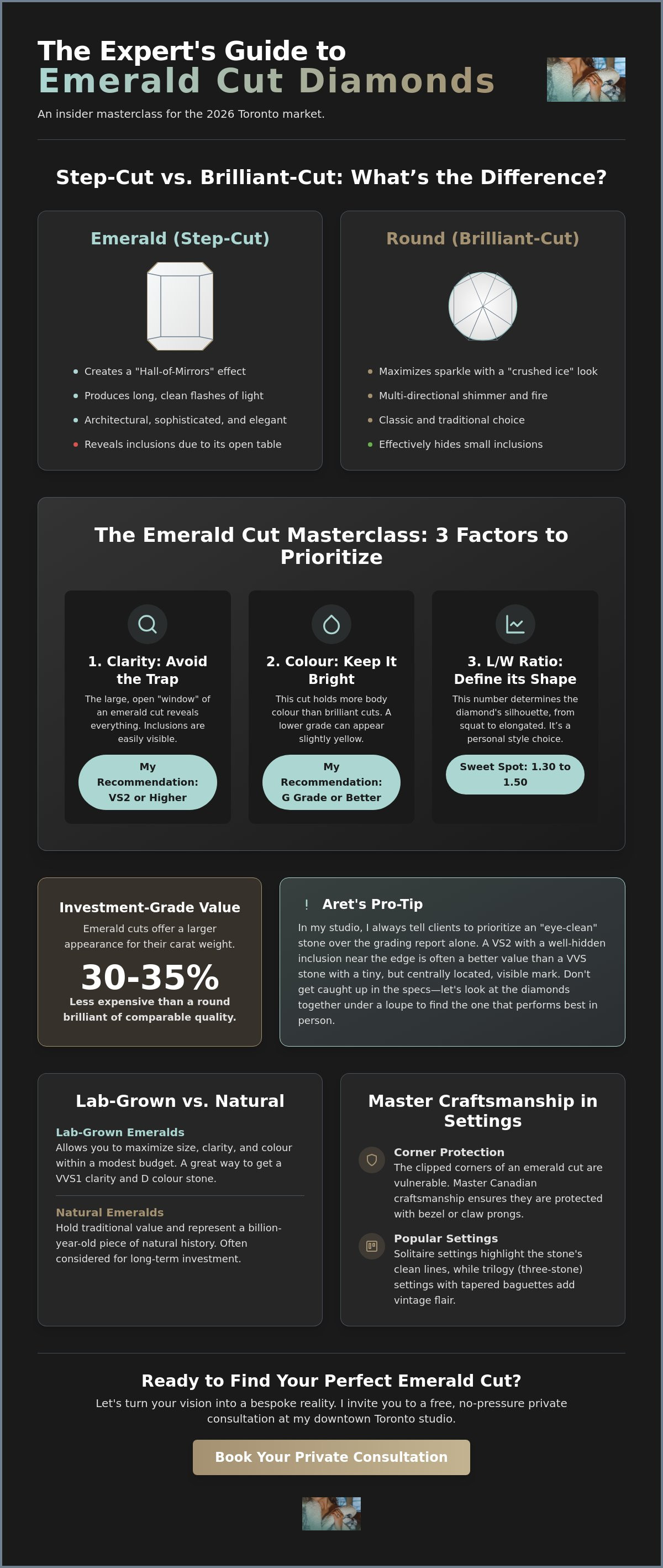
When we talk about emerald cut engagement rings, the conversation usually starts with the stone, but the setting is what ensures its longevity. The corners of a step-cut diamond are its most vulnerable points. Unlike a round brilliant, these sharp rectangular edges can chip if they aren't properly shielded. I always recommend V-prongs or fine claw prongs to my clients. These styles don't just offer security; they accentuate the stone's architectural shape without overcrowding the diamond's face.
For many, the "trilogy" setting is the gold standard for this cut. Pairing a central emerald shape with tapered baguettes creates a seamless transition of light. It's a look that defines custom engagement rings in Toronto this year. While platinum remains a popular choice for its strength, I’m seeing a massive resurgence in 18k yellow gold. The warm metal provides a stunning contrast against a high-clarity, colourless diamond, making the stone pop.
Pro-Tip: I suggest a slightly thicker band for emerald cuts. This balances the visual weight of the elongated stone and ensures the ring remains an investment-grade piece that lasts a lifetime. A band that is too thin can look disproportionate and may warp over decades of wear.
Many couples in the GTA are looking for ways to make their piece feel more personal. A diamond inside the ring is a beautiful way to do this. It’s a private luxury, a secret stone that sits against the skin. It adds a layer of meaning without cluttering the clean, minimalist lines that make emerald cut engagement rings so appealing.
Ready-made settings are built for "average" stones. However, every emerald cut has a unique length-to-width ratio. If you put a 1.45 ratio stone into a 1.30 ratio pre-cast setting, you'll see unsightly gaps. Master Canadian craftsmanship means we build the setting around your specific diamond. This ensures a flush fit that protects the stone's integrity and prevents it from becoming loose over time. If you're ready to see how a bespoke setting can elevate your stone, book your custom design session at our downtown studio today.
Designing emerald cut engagement rings is a deeply personal journey that shouldn't be rushed. In my experience, the most successful designs begin with a private, one-on-one session at our downtown Toronto studio. This environment allows us to move beyond the screen and look at how a stone truly performs in natural light. I’ll help you select a stone that fits your budget while ensuring the final piece reflects Master Canadian craftsmanship and your unique vision.
When you prepare for your appointment, I suggest bringing three things: inspiration photos, your budget goals, and an open mind for diamond education. You don't need to be an expert before you walk through the door. My role is to act as your guide, helping you navigate the technical nuances of step-cuts so you can make an informed decision. I take a direct, no-pressure approach because I believe an investment-grade piece should be chosen with confidence, not under duress.
Timing is also a practical factor to consider. I typically recommend starting the process 6 to 8 weeks in advance. This timeline ensures we have enough room to source the finest stones from the 2026 market and hand-forge a setting that is perfectly calibrated to your diamond's specific dimensions. Custom work is a deliberate process, but the result is a ring that stands apart from mass-produced alternatives.
If you are curious about the specific steps we take, you can read my what to expect guide. One of the most important parts of the visit is seeing stones in person. Emerald cuts have a unique visual "depth" that cameras often fail to capture. You need to see how the light travels through the parallel facets to truly appreciate the hall-of-mirrors effect in a real-world setting.
My passion for this craft is rooted in a family heritage that spans three generations. You can learn more about who is Aret to see why I prioritize transparency and education in every consultation. We view the design journey as a collaboration. I bring the technical expertise and Master Canadian craftsmanship, but the heart of the ring comes from your story and your style.
If you're ready to explore emerald cut engagement rings without the high-pressure sales tactics of traditional retail, I invite you to a free private consultation at our downtown Toronto studio. Let’s work together to create a piece that is as enduring as your commitment.
Choosing emerald cut engagement rings is about more than just selecting a diamond shape; it's a commitment to transparency and structural beauty. By now, you understand that the "hall-of-mirrors" effect requires a sharp eye for clarity and a setting that respects the stone's unique dimensions. Whether you are leaning toward a modern lab-grown stone or a natural investment-grade asset, the goal is always to balance technical precision with your personal story.
In my experience, the most meaningful rings are those where every detail, from the corner protection to the metal colour, is intentional. As a third-generation master jeweller at my downtown Toronto private studio, I focus on education over pressure. I specialize in GIA-certified investment-grade stones and Master Canadian craftsmanship to ensure your ring remains a timeless piece of art.
Ready to see the 'hall-of-mirrors' effect in person? Book your private consultation with Aret in Toronto today. I look forward to welcoming you into the studio to begin this collaborative journey together.
Emerald cut diamonds are typically 30% to 35% less than round brilliant diamonds of the same carat weight and quality. This price difference exists because the cutting process for step-cuts results in less wasted diamond material. Choosing this shape allows you to select a larger stone or a higher clarity grade while maintaining an investment-grade value for your piece.
I recommend a clarity grade of VS2 or higher for emerald cut engagement rings to ensure the stone is eye-clean. Because the large, open table acts like a window, inclusions are much easier to spot than in rounded shapes. In my experience, a VS2 diamond with a small inclusion tucked near the corner facets offers the best balance of visual perfection and budget logic.
Emerald cuts don't produce the "crushed ice" sparkle or intense fire found in round or oval diamonds. Instead, they offer a hall-of-mirrors effect characterized by long, clean flashes of light and dark. This look is far more architectural and understated. It appeals to those who value a sophisticated, glass-like transparency over a high-shimmer aesthetic.
To determine if a stone is eye-clean, you must inspect it from the top down under natural lighting without a magnifying loupe. If you can't see any dark spots or feathers through the centre table, the stone is likely suitable. I always suggest viewing these diamonds in person at our downtown Toronto studio since grading reports don't always capture how an inclusion reflects within the step-cut facets.
Yes, we frequently use this shape for moissanite engagement rings to achieve a bold, high-clarity look. Moissanite is a durable and brilliant alternative that performs exceptionally well in a step-cut. It allows you to maximize the size of the stone while focusing your budget on Master Canadian craftsmanship for the final setting to ensure the ring lasts a lifetime.

© Copyright 2023 Livia Diamonds. All Rights Reserved